
Part 2: Leaky Gut, the Microbiome and Pain Sensitivity
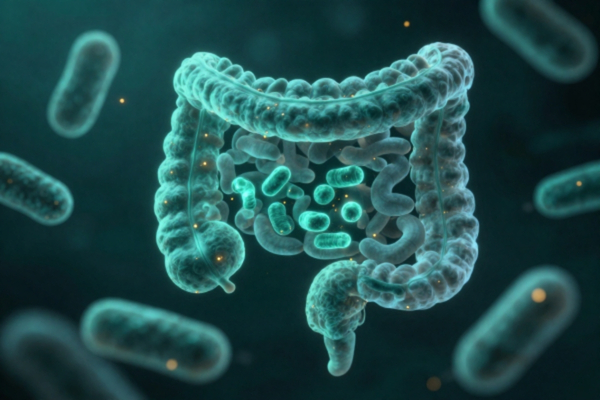
Leaky Gut: What Does It Actually Mean?
“Leaky gut” is a phrase you may have heard.
The more scientific term is increased intestinal permeability.
Your gut lining is supposed to be selectively permeable. That means it allows properly digested nutrients through into the bloodstream, while helping keep larger unwanted particles, toxins, microbes and inflammatory compounds out.
Think of it like a very clever security gate.
The cells of the gut lining are held together by structures called tight junctions. These tight junctions help regulate what passes between gut cells. When this barrier becomes less well regulated, substances from inside the gut may interact more with the immune system, potentially increasing inflammatory signalling. Zonulin is one of the proteins studied in relation to tight junction regulation and intestinal permeability. ([PMC][6])
This is where “leaky gut” becomes relevant to pain.
If the immune system is constantly being poked and prodded, the body can become more reactive. For someone with ongoing pain, this matters because inflammation is one of the things that can keep pain pathways sensitised.
So, a person may be doing the right exercises, having treatment, stretching, strengthening and trying to heal — but if the gut is constantly contributing to inflammatory signalling, they may feel like they are always pushing uphill.
The famous phrase “all disease begins in the gut” is often attributed to Hippocrates. It is probably too simplistic if taken literally, but the modern point still stands: gut health can have a surprisingly wide influence on the rest of the body. ([PubMed][7])
For gut health, I often use this analogy:
If you lined up ten different people with ten different health problems and I was only allowed to support one system in all of them to try to get the best general improvement, I would choose the gut.
Not because the gut is always the only problem.
But because it is so central to digestion, absorption, immune balance, inflammation and repair.
The Microbiome and Pain Sensitivity
Your microbiome is not just there to help digest fibre.
Your gut bacteria produce compounds that influence the immune system, brain, hormones and nervous system.
Some bacteria help produce anti-inflammatory compounds. Others, when overgrown or imbalanced, may contribute to irritation, bloating, immune activation and inflammatory signalling.
A healthy microbiome tends to be diverse. That means lots of different helpful species working together and in balance.
A struggling microbiome may become less diverse, or certain less-helpful organisms may dominate while more beneficial organisms become less abundant.
This is called dysbiosis.
Dysbiosis has been associated in research with inflammatory conditions, gut symptoms, immune imbalance, mood changes and altered gut-brain communication. It has also been observed across several chronic pain conditions, although the research is still developing and does not mean the gut is the only cause of pain. ([Frontiers][8])
From a pain perspective, this is fascinating because the gut and nervous system are constantly communicating through what is often called the gut-brain axis.
So, if the gut is inflamed, irritated or imbalanced, it may contribute to a nervous system that feels more “switched on”.
And when the nervous system is switched on, pain often feels worse.
Could the Gut Even Influence Back Pain?
This is an emerging area of research.
Some studies and reviews are now exploring a possible relationship between gut dysbiosis, low-grade inflammation, intervertebral disc degeneration and low back pain. This does not mean “all back pain comes from the gut”, but it does suggest that spinal health may be influenced by wider inflammatory and metabolic factors. ([thespinejournalonline.com][9])
So yes, your back pain may be your back.
Your hip pain may be your hip.
Your tendon pain may be your tendon.
But the internal environment those tissues are trying to heal in matters enormously.
Final Thought
Pain is rarely just about the painful tissue itself.
The body is an interconnected system, and the gut plays a much bigger role in overall health than many people realise. From immune regulation and inflammation to nervous system signalling and recovery, the state of the gut can influence how the body responds to stress, irritation and healing.
This does not mean the gut is the sole cause of chronic pain, nor does it mean every pain condition can be solved through diet or supplements alone. But it does mean that looking after gut health may help create a more supportive internal environment for recovery.
For some people, addressing gut health may become one important piece of the puzzle alongside movement, strength, sleep, stress management and appropriate treatment.
Because sometimes the question is not only, “What tissue hurts?”
It is also, “What kind of environment is that tissue trying to heal in?”
References
Goudman L. et al. Gut dysbiosis in patients with chronic pain: a systematic review. Frontiers in Immunology. 2024. ([Frontiers][8])
Sturgeon C. & Fasano A. Zonulin, a regulator of epithelial and endothelial barrier functions. 2016. ([PMC][6])
[6]: https://pmc.ncbi.nlm.nih.gov/articles/PMC5214347/?utm_source=chatgpt.com "Zonulin, a regulator of epithelial and endothelial barrier ... - PMC"
[7]: https://pubmed.ncbi.nlm.nih.gov/29444202/?utm_source=chatgpt.com "'All disease begins in the gut': was Hippocrates right?"
[8]: https://www.frontiersin.org/journals/immunology/articles/10.3389/fimmu.2024.1342833/full?utm_source=chatgpt.com "Gut dysbiosis in patients with chronic pain: a systematic ..."
[9]: https://www.thespinejournalonline.com/article/S1529-9430%2824%2900308-5/abstract?utm_source=chatgpt.com "Does the gut microbiome influence disc health and disease ..."