Part 3: What Can Disrupt Gut Health?
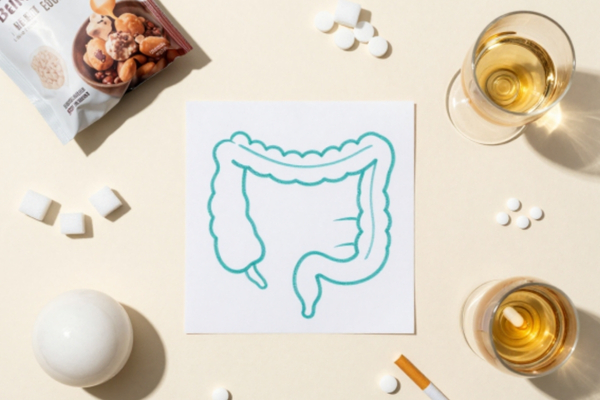
Foods That May Trigger Gut Irritation or Inflammation
As we are speaking about gut health, we have to speak about food.
Common inflammatory or gut-irritating foods may include:
Ultra-processed foods
These are foods with long ingredient lists, additives, preservatives, emulsifiers, artificial flavours and very little real nutritional value.Ultra-processed foods have been linked in research with changes in the gut microbiome, gut barrier function and inflammatory processes. ([PMC][10])
Refined carbohydrates
White bread, pastries, biscuits, cakes and many processed cereals can spike blood sugar and may contribute to inflammatory patterns when eaten regularly.Wheat and gluten are also common triggers for some people, although not everyone needs to avoid them. The key is whether your body reacts to them.
Processed seed oils and deep-fried foods
These may contribute to oxidative stress and inflammatory load, particularly when they replace healthier fats such as olive oil, avocado, nuts, seeds and oily fish.Excess alcohol
Alcohol can irritate the gut lining, affect sleep, disrupt blood sugar and alter microbiome balance.Food intolerances or sensitivities
Some people react to wheat, dairy, gluten, eggs, soy or other foods.
These foods are not automatically “bad”, but if your body is reacting to them, they can become part of your inflammatory picture.Artificial sweeteners and additives
Some people tolerate these well, but others notice bloating, digestive upset or changes in appetite and cravings.Household chemicals
Here is an interesting one.
We are increasingly exposed to chemicals through cleaning products, residues, plastics, cosmetics and household products. I will do another newsletter on this soon because it is a big subject.
Think about dishwasher tablets. The adverts show how strong they are at “degreasing” dirty plates. That is useful for the plates, of course. But we should also be thoughtful about chemical residues and the total toxic load the body has to process.
That does not mean panic. It means awareness. Use simple products where possible. Rinse well. Reduce unnecessary chemical exposure where you can.
Correct Digestion: You Are Not Just What You Eat
You may have heard the phrase:
“You are what you eat.”
But actually, it is more accurate to say:
“You are what you eat, digest, absorb and utilise.”
It is just not quite as catchy.
You could be eating a healthy diet, but if digestion is poor, you may not be breaking food down properly.
Signs digestion may need support include:
✅ Bloating after meals
✅ Reflux or burping
✅ Feeling very full after eating
✅ Constipation
✅ Loose stools
✅ Undigested food in stools
✅ Excessive wind
✅ Cravings
✅ Fatigue after eating
✅ Food reactions
✅ Nutrient deficiencies
✅ Skin flare-ups
✅ Brain fog
If food is not broken down well, it may ferment in the gut, feed the wrong organisms, irritate the gut lining or reduce nutrient absorption.
And nutrient absorption matters for pain and healing.
To repair tissues properly, your body needs protein, minerals, vitamins, essential fats, antioxidants and energy.
Tendons, ligaments, muscles, joints and nerves all need raw materials to heal.
So this becomes relevant to us as osteopaths too.
Because if someone is trying to recover from an injury, tendon problem, back flare-up or chronic inflammatory pain, we want the body to have the best possible healing environment.
Zinc and the Gut Barrier
Zinc is worth mentioning because it plays an important role in immune function, tissue repair and gut barrier integrity.
Research suggests zinc is involved in maintaining intestinal epithelial barrier function and tight junction integrity. Zinc deficiency has been linked with increased intestinal permeability in experimental research. ([MDPI][11])
That does not mean everyone should start taking high-dose zinc.
But it does mean zinc status may be worth considering in people with poor healing, gut issues, immune problems or inflammatory patterns.
Food sources of zinc include oysters, beef, lamb, pumpkin seeds, hemp seeds, chickpeas, lentils and eggs.
The Gut–Inflammation–Pain Cycle
Here is how it can play out:
Poor digestion, inflammatory foods, stress, antibiotics, infections, alcohol, low fibre or food intolerances may disrupt the gut.
🔥 The gut lining becomes more irritated.
🔥 The microbiome becomes less balanced.
🔥 The immune system becomes more reactive.
🔥 Inflammatory signals increase.
🔥 The nervous system becomes more sensitive.
🔥 Pain feels louder, stiffness increases and recovery slows down.
🔥 Then pain itself becomes stressful.
🔥 Stress further affects digestion and gut barrier function.
🔥 And the cycle continues.
This is why, in clinic, we often look at the whole person.
Because your hip pain may be your hip.
Your back pain may be your back.
Your tendon pain may be your tendon.
But the environment those tissues are trying to heal in matters enormously.
A calm, well-nourished, anti-inflammatory body is a much better healing environment than a stressed, inflamed, poorly digesting one.
So What Helps Gut Health and Pain?
Here are some general tips. They are not personalised, but they can be a very helpful starting point if you feel your diet and digestion are not quite up to scratch.
✅ Start with real food most of the time.
Choose foods that look like food: meat, fish, eggs, vegetables, fruit, berries, beans, lentils, herbs, spices, nuts, seeds and good-quality fats.
✅ Prioritise protein at each meal.
Protein provides amino acids for muscle, tendon, ligament, immune and tissue repair.
✅ Eat colourful vegetables and berries.
These provide antioxidants and polyphenols, which support the microbiome and help regulate oxidative stress.
✅ Include fibre if tolerated.
Good options include vegetables, beans, lentils, oats, flaxseed, chia seeds, nuts and seeds. However, go carefully if you bloat easily. In some people with IBS or gut imbalance, too much fibre too quickly can make symptoms worse.
✅ Use healthy fats.
Olive oil, avocado, oily fish, nuts and seeds are better choices than deep-fried foods and heavily processed fats.
✅ Chew properly.
Digestion starts in the mouth. If you inhale your food in four minutes while answering emails, your gut may not thank you.
✅ Avoid eating in a rush or when highly stressed.
A calmer nervous system supports better digestion. A stressed nervous system can reduce digestive secretions and motility.
✅ Support regular bowel movements.
Constipation can increase bloating, discomfort and toxin reabsorption.
✅ Reduce ultra-processed foods, excess sugar and alcohol.
You do not need to be perfect. But reducing the daily inflammatory load can make a big difference.
✅ Consider whether certain foods are triggering symptoms.
If every time you eat a certain food you feel bloated, foggy, tired, itchy, achy or inflamed, it is worth investigating.
✅ Support the microbiome with fermented foods if tolerated.
Live yoghurt, kefir, sauerkraut and kimchi may help some people. However, these foods can aggravate others, especially people with IBS, histamine issues or significant gut imbalance.
And most importantly:
Personalise it.
Because what helps one person may bloat another.
That is where testing and individual guidance can be useful.
Would You Like to Know What Your Gut Is Saying?
At The Perrymount Clinic, we offer a Bioresonance Gut Health Scan to help explore possible digestive stressors, food sensitivity patterns, gut imbalance patterns and areas that may be contributing to inflammation.
This can be especially useful if you have ongoing pain alongside symptoms such as:
❌ Bloating
❌ Reflux
❌ Constipation or loose stools
❌ Food reactions
❌ Fatigue
❌ Brain fog
❌ Skin issues
❌ Sugar cravings
❌ Inflammatory flare-ups
❌ Slow recovery from injurie
❌ Pain that keeps coming back
The aim is not to replace medical testing where that is needed.
If you have unexplained weight loss, blood in the stool, persistent severe abdominal pain, night sweats, ongoing vomiting, anaemia, difficulty swallowing, a major change in bowel habit or symptoms that are worsening, you should speak to your GP.
The aim of our gut health scan is to give us another window into your health, so we can make a more personalised plan to support digestion, microbiome balance, inflammation and healing.
This may be particularly relevant if you have pain, inflammation, autoimmune issues or recurring injuries alongside digestive symptoms such as IBS, bloating, reflux or food reactions.
Final Thought
Gut health is not just about digestion.
It is deeply connected to inflammation, immune function, nervous system regulation, energy, recovery and how the body heals.
For many people, chronic pain is not caused by just one thing. It is often the result of multiple stressors building up over time — poor sleep, stress, inflammation, injury, diet, nervous system overload and digestive imbalance all interacting together.
That is why looking after the gut can sometimes make such a meaningful difference.
When digestion improves, inflammation settles, nutrient absorption supports tissue repair and the nervous system becomes calmer, the body is often placed in a much better position to recover.
This does not mean perfection is required.
Small, consistent changes to food quality, digestion, stress levels and overall lifestyle can have a surprisingly powerful effect over time.
Because ultimately, healing is not just about treating symptoms.
It is about creating the healthiest possible environment for the body to repair, regulate and function the way it was designed to.
References
Rondinella D. et al. The Detrimental Impact of Ultra-Processed Foods on Gut Microbiota and Human Health. 2025. ([PMC][10])
Wan Y. et al. The Impact of Zinc and Zinc Homeostasis on the Intestinal Mucosal Barrier. 2022. ([MDPI][11])
[10]: https://pmc.ncbi.nlm.nih.gov/articles/PMC11901572/?utm_source=chatgpt.com "The Detrimental Impact of Ultra-Processed Foods on ... - PMC"
[11]: https://www.mdpi.com/2218-273X/12/7/900?utm_source=chatgpt.com "The Impact of Zinc and Zinc Homeostasis on the Intestinal ..."