Zonulin; It’s not a baddie from Star Trek it’s actually a Goodie in your Guts.
Could problems elsewhere in the body begin with what is happening inside the gut?
The lining of your digestive tract has a surprisingly difficult job. It must allow digested nutrients to pass into the bloodstream while keeping bacteria, toxins and larger food particles safely contained within the intestine.
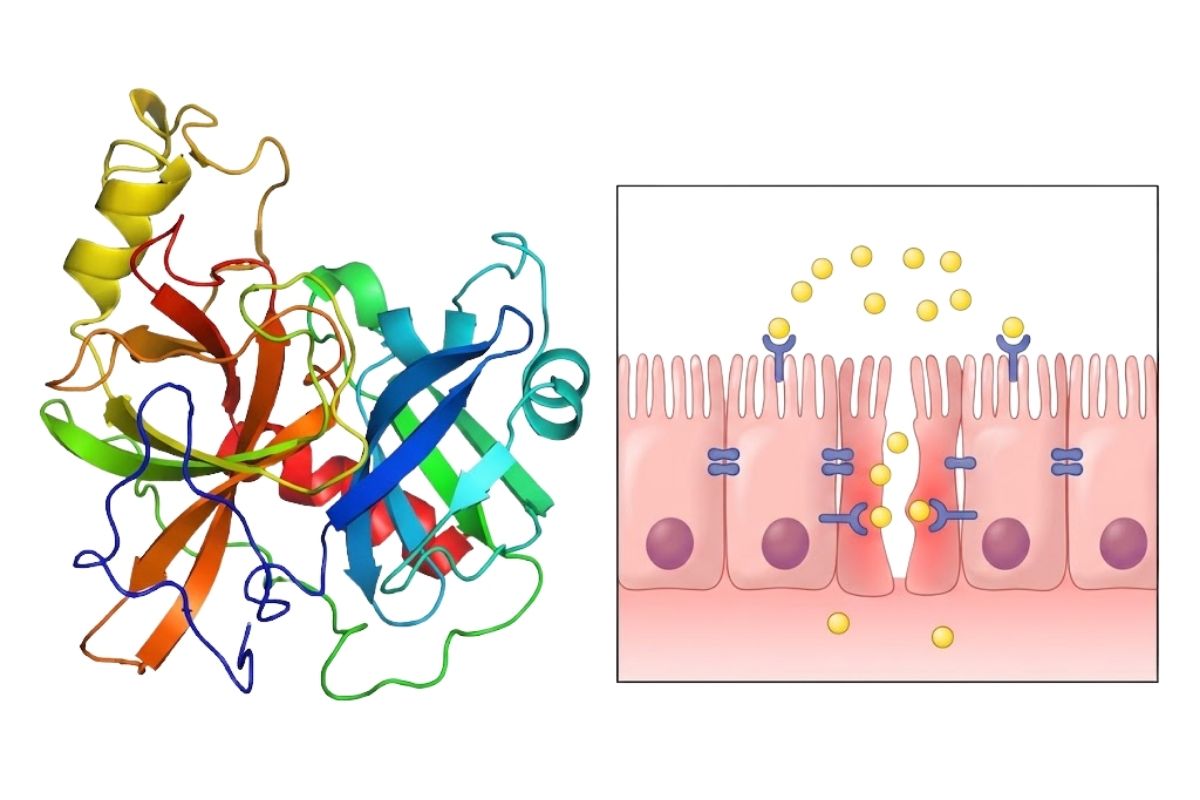
It manages this through microscopic structures called tight junctions. Think of these as adjustable gates between the cells lining the gut selectively allowing things into our bloodstream and keeping others within the gut.
One of the substances involved in opening and closing these gates is called zonulin.
What is zonulin?
Zonulin is part of the body’s normal gut-barrier regulation system. When released, it can temporarily loosen the tight junctions between intestinal cells, allowing more material to pass through the gut lining.
This is not automatically harmful. The gut barrier is designed to be dynamic rather than completely sealed.
However, if the barrier remains more permeable than it should be, substances from inside the intestine may have greater contact with the immune system. This is what people commonly mean when they talk about “leaky gut”—although the more accurate medical term is increased intestinal permeability.
Laboratory research has shown that gliadin, a component of gluten, can stimulate zonulin-related signalling and increase intestinal permeability.
What might disturb the gut barrier?
Gut permeability is rarely about one food or one substance. It may be influenced by several interacting factors, including:
➡️Coeliac disease and other inflammatory digestive conditions
➡️Gastrointestinal infections and changes within the gut microbiome. Like bacterial or candida overgrowth.
➡️Certain medications, particularly frequent anti-inflammatory medication. Perhaps you are taking them regularly for chronic pain.
➡️Ongoing digestive inflammation
➡️Alcohol and dietary irritation, like food intolerances
➡️Psychological and physiological stress
Stress is especially interesting. In a human experiment, public-speaking stress increased small-intestinal permeability in participants whose cortisol increased significantly. The researchers found evidence that corticotropin-releasing hormone and mast-cell activation were involved.
Animal research has similarly shown that repeated severe stress can alter tight-junction proteins, reduce gut-barrier resistance, disrupt the microbiome and create a more inflammatory intestinal environment. This does not prove that ordinary daily stress causes disease, but it helps explain why the brain, nervous system, immune system and digestive tract cannot always be treated separately.
Could increased permeability cause symptoms?
Possible symptoms discussed in relation to poor gut health include:
👎Bloating or abdominal discomfort
👎Irregular bowel movements
👎Reactions following certain meals
👎Fatigue or reduced energy
👎Skin flare-ups
👎Headaches or “brain fog”
However, these symptoms are not specific to leaky gut. They can also occur with irritable bowel syndrome, coeliac disease, inflammatory bowel disease, nutrient deficiencies, thyroid disorders, medication effects and many other conditions. But they can have a gut organ too.
Our gut health scan at The Perrymount Clinic
We have a bioresonance scan available at The Perrymount Clinic which is a great starting point for looking at gut health. It’s £99 for a comprehensive scan with the result being food to avoid, a food plan to use and supplements to build gut health.
We use the “5R” program for gut health which is a well established format for gut health. Within the supplements chosen can be ones that help leaky gut, by giving the body the ingredients to repair the damaged gut lining.
It’s great value.
This scan is actually great value. It’s remote and investigated by a hair sample.
Learn more here:
https://page.theperrymount.com/advancedhealthscan
As an example, a food intolerance blood test is about £200, a zonulin test is £100, a stool sample test is £300. Seeing a functional medicine practitioner who would prescribe these is a round £200 and then the supplements prescribed easily £300.
We tend to prescribe a maximum of 4 supplements which are typically in the region of £80 - £100.
The £99 test looks at everything I have descried already in a “vibrational or energetic” way. The scan is used as a non-diagnostic wellness tool. It does not diagnose leaky gut, food allergy, coeliac disease or another medical condition. Instead, it looks at energetic patterns and gives guidance on what is happening and what imbalances are in the gut, food intolerances and what supplements to use to heal the gut. It’s an amazing way to access your health without spending £1000’s on lab tests.
Rather than handing everyone the same restrictive “gut-healing diet,” or fixed supplement protocol the aim is to develop a practical plan that is appropriate for the individual. For example, when it comes to probiotics we will see that they are required but then scan over 20 different products from different companies to pick the one that is most “energetically” aligned to you.
Learn more about our Advanced gut health scan here:
https://page.theperrymount.com/advancedhealthscan